SAS: Zombie Assault 4
- 4.4
- Rating
- 10.00M
- Installs
- Free
- Price
 Analysis by App-foxy
I spent time with SAS: Zombie Assault 4 as a fast, top-down action game, and my first impression was that it wants you in the middle of trouble almost immediately. It is built around short bursts of movement, shooting, and survival rather than a slow story-led campaign. That makes it easy to pick up when I have a few minutes, while the character-building side gives me a reason to return when I want something more involved.
The basic idea is straightforward: customize a hero, improve equipment, choose weapons, and work with other players against waves of zombies. That description sounds simple, but the appeal comes from how those choices affect the way each encounter feels. I found myself thinking less about merely clearing enemies and more about whether my current setup suited close-range pressure, crowd control, or a safer approach from a distance.
How the action feels during quick sessions
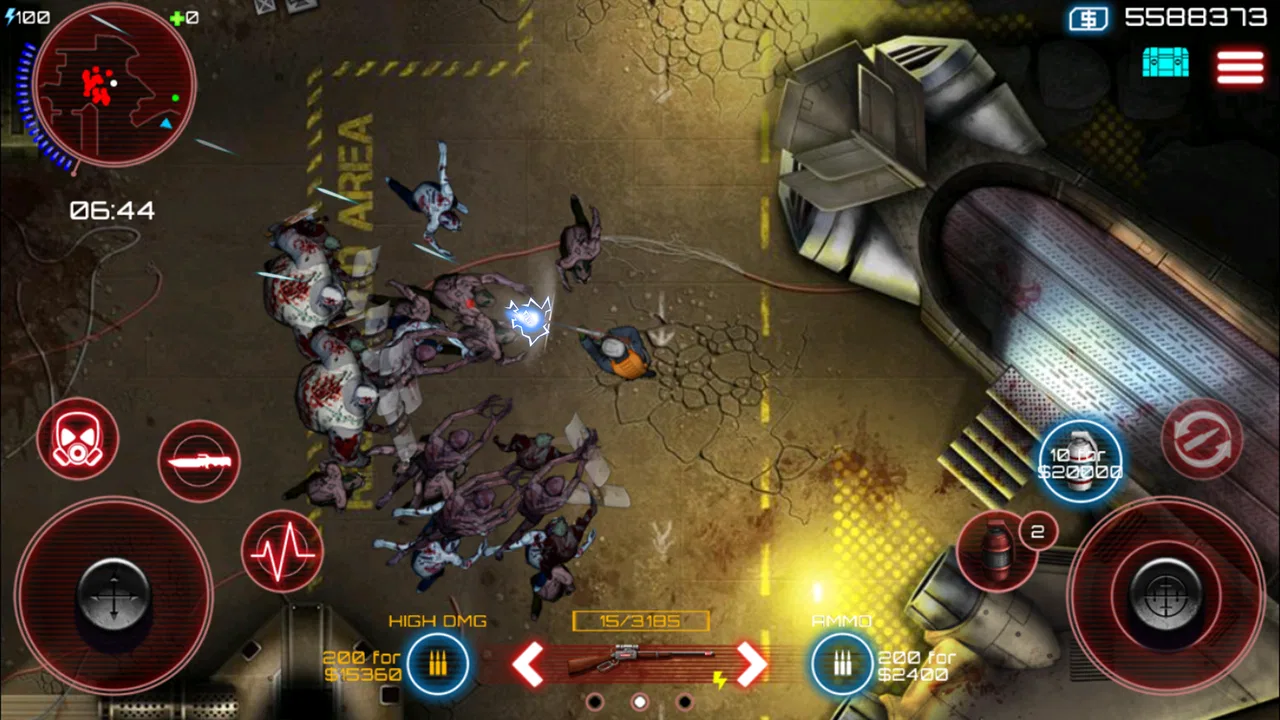
The game’s speed is best understood as a cycle of pressure and recovery. Enemies push toward you, the screen can become crowded, and hesitation is usually more dangerous than making a quick but imperfect decision. I liked that the controls and viewpoint keep the action readable enough to react, yet the zombie hordes still create moments where positioning matters more than simply holding down the attack button.
You May Also Like

 Blood Strike: 2.5 Anniversary
Blood Strike’s Loadouts Turn Every Drop Into a Tactical Gamble
A close look at Blood Strike’s custom loadouts: how fast access to signature weapons reshapes its battle royale rhythm, rewards preparation, and narrows the gap between fights.

 Pandora - Music & Podcasts
Pandora’s Music Is Easy to Start, but Harder to Recover
Pandora’s strength is its low-effort path from a seed to a station. Its weak spot is how much confidence it asks you to place in connection, setup, and quiet recovery.

 8 Ball Pool
 Is Built on Rivalries, Rematches, and Routine
A close look at the rivalries, rematches, shared routines, and unanswered safety questions that turn a quick pool match into a persistent mobile community.

 Samsung Music
’s Quiet Strength Is Playing What You Already Own
Its reach comes less from spectacle than from dependable access to a personal library. That simplicity is both the app’s strongest retention engine and its ceiling.

 AccuWeather: Weather Radar
AccuWeather Review: A Quick, Clear Forecast for Everyday Decisions
For everyday plans, the best forecast is the one you can understand quickly. AccuWeather makes rain timing, radar, and local conditions easy to act on, with a few trade-offs.

 Hill Climb Racing
Why Hill Climb Racing Still Turns Crashes Into One More Run
A tiny car, a bumpy hill and one more upgrade: Hill Climb Racing keeps resurfacing because its simple chaos makes every near-miss feel personal.
More From Our News Desk



For an everyday scenario, I can see this working well during a commute or a short break. I can start a session without needing to remember a complicated plot, move through a combat-heavy section, and stop after making useful progress. It is also a good fit for someone who enjoys repeating action stages to improve a build rather than expecting every session to deliver a completely new experience.
That quick-session strength has a trade-off. The game can feel repetitive if I approach every encounter with the same weapon and movement habits. The most satisfying way to play is to treat equipment changes as practical experiments. If a weapon feels comfortable but struggles when several enemies close in, I would rather adjust my loadout than blame the controls. This is one of the less obvious strengths of the game: the customization encourages me to solve combat problems instead of relying on one favorite setup forever.
The progression also gives the action a useful sense of direction. Improving a hero is not only about making numbers larger in my mind; it changes how confidently I enter crowded fights. A stronger setup can make a familiar situation feel manageable, but it does not remove the need to move intelligently. That balance is important because a game that lets upgrades solve everything can become dull very quickly.
Cooperative play adds another layer to the pacing. Teaming up against the undead changes the experience from a purely personal test into something more social and less predictable. I would recommend it to players who enjoy coordinating around a shared threat, although anyone looking for a quiet, pause-friendly action game should understand that the intensity is part of the appeal. The game is at its best when I am actively responding rather than casually tapping through a level.
What happens when the screen gets busy
The heavier moments are the ones where I pay closest attention to movement, weapon choice, and the direction of incoming enemies. A crowded fight is not merely visually busier; it asks me to make several decisions quickly. Should I keep firing at the nearest target, create space, or move toward a safer angle? Those choices make the action more engaging than a simple corridor shooter, especially when my current gear is not perfectly suited to the situation.
My practical advice is to avoid changing everything at once. When a setup performs poorly, I would first identify the real problem. If enemies are reaching me too easily, a movement or range adjustment may matter more than replacing every item. If the issue is slow clearing, a different gun or gear choice could be more useful. Making one meaningful change at a time helps reveal what actually improved the run, rather than turning customization into guesswork.
Heavy-use moments are also where expectations about speed should stay realistic. A top-down action game with waves of enemies naturally asks more from a device than a menu-driven puzzle game. I would expect the busiest encounters to be the most demanding parts of a session, especially on older phones or tablets. The important point is that the game’s design makes those moments central, not occasional decoration, so device comfort matters more here than it would in a slower genre.
I also noticed a trade-off between visual excitement and mental fatigue. Repeated waves can be thrilling when I am trying to survive a difficult push, but the same intensity can become tiring during a long play period. I prefer treating it as a game for focused sessions instead of leaving it running in the background or trying to play endlessly. That approach also makes the progression feel clearer because each return has a specific purpose: test a weapon, improve a hero, or tackle another cooperative run.
The gun and gear choices are especially valuable for players who like to refine a play style. Someone who enjoys close pressure can look for a setup that supports aggressive movement, while a more cautious player may prefer tools that make distance and positioning easier to maintain. I would not call the customization cosmetic; it is tied directly to how I handle danger. That makes equipment decisions one of the game’s more meaningful systems.
Reliability, recovery, and the cost of a bad run
In a game this action-focused, reliability is not only about whether it opens successfully. It is also about whether I can understand what went wrong after a failed run and return with a better plan. SAS: Zombie Assault 4 benefits from having a clear combat loop: fight, assess the result, adjust the hero or gear, and try again. That structure makes failure feel useful instead of completely wasted.
Recovery is particularly important when a session becomes hectic. I do not want every mistake to force me into a long explanation or a complicated restart process. The straightforward action format helps here because I can quickly identify whether I moved badly, used the wrong weapon, or underestimated the pressure from a group. The game rewards learning through repetition, which is a better form of recovery than simply handing out progress without teaching me anything.
There is still friction for players who dislike repeated attempts. If you want a game where one careful run usually settles the challenge, this may feel demanding. Its design expects experimentation and persistence. I would skip it if my ideal mobile game is a relaxed experience with little pressure, because the zombie crowds are meant to keep me alert and occasionally punish poor positioning.
The cooperative side can also affect how reliable a session feels from a personal perspective. Playing with others can make difficult encounters more manageable and more entertaining, but it also means the experience is less entirely under my control. I enjoy that variation when I am in the mood to coordinate, yet I would choose solo play when I want a predictable pace or need to stop quickly.
One useful habit is to treat each return to the game as a small test rather than a demand to finish everything. I might focus on whether a new weapon handles a crowded room better, or whether a gear adjustment lets me stay mobile. This keeps recovery manageable and prevents the familiar mobile-game trap of repeating the same attempt without learning from it.
Older phones, storage expectations, and practical limits
The game supports devices running Android 5.0 or newer, which gives it a broad compatibility range. That does not mean every supported device will feel identical during crowded combat. A phone that handles menus smoothly may still feel less comfortable when many enemies and effects compete for attention. I would judge the experience by the busiest fights, not by how quickly the opening screens appear.
Because the game is free to download, it is easy to try without committing money at the start. It includes optional purchases ranging from $0.99 to $49.99 per item, so I would approach the progression with a clear personal limit. The presence of purchases is not automatically a problem, but players who dislike any temptation to spend should be aware that the free entry point does not mean every possible shortcut is free.
My recommendation for a modest or older device would be practical: close other demanding apps, keep enough free space for normal device operation, and test a busy combat section before deciding whether the game feels comfortable. I am not assigning a performance score based on hardware I cannot inspect, but the action itself tells me where the pressure will be. Crowded encounters are the meaningful test, while menus and quiet moments are not.
Battery and heat expectations should be similarly sensible. A game built around continuous shooting, movement, and enemy waves is more likely to feel demanding during long sessions than during a quick check-in. I would play shorter rounds if my phone already struggles with demanding games. That is not a criticism unique to this title; it is simply part of choosing an action game over a lightweight card or word game.
On iOS and Android, the right choice will depend less on the operating system label and more on the age and capability of the particular device. The minimum Android requirement makes the entry door broad, but the most enjoyable experience still belongs to hardware that can remain responsive when the screen is crowded. If smooth reactions are your top priority, I would test before investing heavily in optional purchases or spending a lot of time building a character.
Who will enjoy the progression, and who should pass
I think the strongest audience is players who like action games with a repeatable loop and meaningful loadout decisions. If you enjoy trying different guns, adjusting a hero, and learning how to handle increasingly uncomfortable situations, there is enough structure here to keep the shooting from feeling empty. The cooperative option is another reason to choose it over a purely solitary zombie game.
It is also a good match for someone who wants a game that can be played in compact sessions but still offers room for longer involvement. I can imagine playing a quick run while waiting for an appointment, then returning later to think more carefully about equipment. That flexibility is useful, although the most intense encounters are not ideal when I need to divide my attention.
I would point a different kind of player toward a calmer alternative. If you prefer turn-based strategy, story-heavy role-playing, or a game that can be paused at every moment without losing momentum, this is probably not the right fit. Its pleasure comes from immediate reactions and repeated combat improvement, not from slow exploration or a deep narrative conversation system.
Compared with many casual zombie games, this one asks more from the player than simply aiming at targets until the screen clears. The hero, gear, and gun choices give the action a build-focused layer. Compared with a traditional console-style shooter, however, the repeatable mobile structure can feel more compact and less cinematic. I prefer this format when I want direct action and customization rather than a long scripted campaign.
The age rating is Teen, which is worth considering for families choosing games for younger players. The zombie theme and action presentation are central to the experience, so I would not treat it as a child-oriented title simply because it is available on a phone. Adults and older teens who are comfortable with that tone are the audience I would have in mind.
My performance verdict after weighing the trade-offs
ninja kiwi has made an action game that understands the value of immediate pressure. The main loop is easy to grasp, but the customization gives it more staying power than a basic wave shooter. I especially like the way equipment choices can change my approach to a fight; that is where the game feels more thoughtful than its simple premise suggests.
Its popularity is substantial, with over ten million installs, and the average rating is 4.4 from around 409 thousand ratings. Those figures do not replace personal testing, but they match my impression that the game has found a broad audience among mobile action players. It has been available since October 17, 2014, and version 2.2.2 remains the current version I would look for when checking compatibility and updates.
The limitations are just as clear. Busy fights can be demanding for older hardware, extended sessions may feel tiring, and players who dislike repetition or optional purchases may lose patience. The free price makes experimenting easy, but I would set a spending boundary before getting deeply involved, particularly because individual in-app purchases can reach $49.99.
My final recommendation is positive, with conditions. I would suggest it to a friend who wants a fast zombie shooter with hero customization, weapon experimentation, and cooperative possibilities. I would first ask what device they use and whether they enjoy replaying combat to improve a build. If the answer is yes, this is a strong candidate; if they want a quiet, story-first, or completely low-pressure game, I would send them elsewhere.
Overall, the best way to approach it is as a focused action game rather than an endless background pastime. Keep sessions purposeful, change one part of a weak loadout at a time, and judge performance during the busiest battles. With those expectations, SAS: Zombie Assault 4 delivers a satisfying mix of quick shooting and practical character development, while remaining honest about the demands of its zombie-filled combat.
FAQs for SAS: Zombie Assault 4
01What is SAS: Zombie Assault 4?
SAS: Zombie Assault 4 is a fast-paced top-down action shooter for Android and iOS. You choose from several classes, equip weapons and armor, and fight through missions filled with increasingly dangerous zombie hordes. The game combines twin-stick shooting, character progression, loot collection, and cooperative multiplayer, making it suitable for players who enjoy repeated combat runs and upgrading their equipment over time.
02Can I play SAS: Zombie Assault 4 offline?
The game may allow some gameplay features to work without a constant internet connection, but its online services are important for multiplayer, account-related progress, events, purchases, and other connected functions. If you plan to play cooperatively or want your progress synchronized reliably, an internet connection is recommended. Availability of offline features can also depend on the version installed and the platform you use.
03Does SAS: Zombie Assault 4 support multiplayer?
Yes, multiplayer is one of the main attractions of SAS: Zombie Assault 4. You can team up with other players and fight through zombie-infested missions together, combining different classes and abilities to survive tougher encounters. Cooperative play can make the game more enjoyable, although success depends on teamwork, suitable equipment, and a stable connection, particularly during intense battles with large enemy groups.
04Is SAS: Zombie Assault 4 free to download and play?
SAS: Zombie Assault 4 is generally available as a free-to-download game, but it includes optional in-app purchases. These purchases can provide additional resources, equipment, or other progression-related benefits, while regular play lets you earn rewards through missions and gameplay. Players should review the store listing and device purchase settings before downloading, especially if children may access the game.
05What devices are recommended for SAS: Zombie Assault 4?
The game is designed for modern Android and iOS devices, but performance can vary depending on the phone or tablet’s processor, memory, operating-system version, and available storage. Because missions can contain many enemies and visual effects, older devices may experience slower performance, longer loading times, or reduced stability. Check the current requirements in the official app store before installing.
Pros
- Fast-paced twin-stick shooting feels responsive and satisfying.
- Large weapon selection supports varied combat styles.
- Character classes offer meaningful differences in abilities.
- Co-op multiplayer makes missions more enjoyable with friends.
- Frequent loot drops keep progression feeling rewarding.
Cons
- Energy limits can interrupt longer play sessions.
- Some upgrades and equipment require substantial grinding.
- Enemy waves may feel repetitive after extended play.
- The small-screen controls can become crowded during battles.
- Online features depend on a stable internet connection.

SAS: Zombie Assault 4
Gallery